From Rust To Readiness: Best-Tec's Role in Military Preparedness
Discover how Best-Tec combines environmental expertise with advanced maintenance strategies to boost US military infrastructure readiness and longevity.
Military readiness is often measured in personnel, weaponry, and logistics. We think of training exercises, supply chains, and technological superiority. But there is a silent, foundational element of readiness that often goes unnoticed until it fails: infrastructure.
Surfaces and submarine combatants, naval bases, hangars, and power plants form the backbone of military operations. When these assets corrode, operations slow down. When maintenance is deferred, readiness suffers.
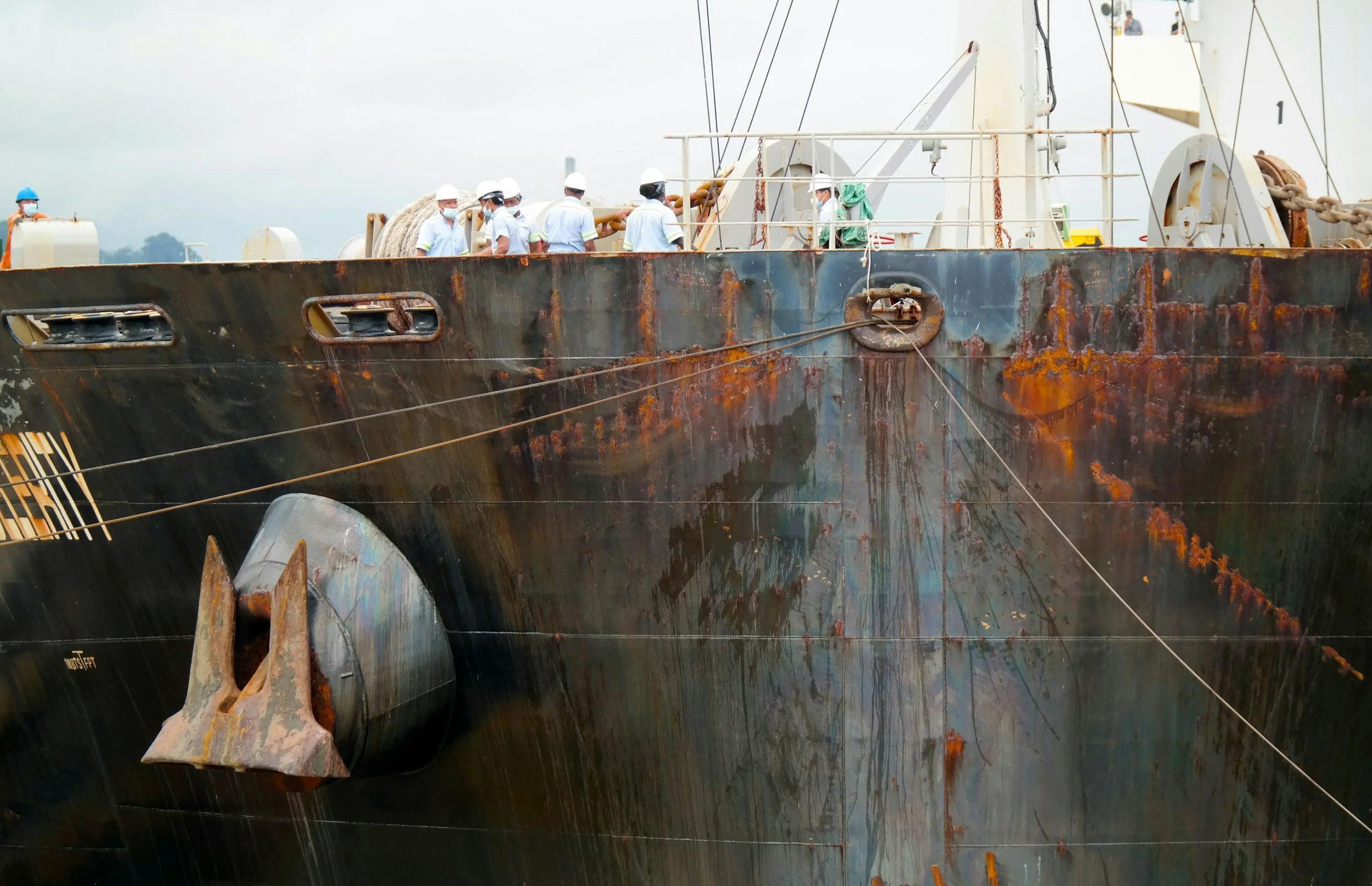
“We know what to do, but we choose not to do it. And we choose not to do it because there’s always some other problem I’ve got to fix. I don’t have time. Our corrosion can wait. And so we don’t implement the fixes.”
-Mark Lattner, Director of the Navy’s Ship Integrity and Performance Engineering, Naval Systems Engineering Directorate. This insight was shared during a panel at the Surface Navy Association’s annual symposium, as reported by Yahoo News.
At Best-Tec, we understand that fighting rust and decay is a critical part of national defense. By combining nearly 40 years of environmental remediation expertise with cutting-edge maintenance technologies, we are helping the US military shift from a reactive stance to a state of constant operational readiness.
The Hidden War on Corrosion
The battle against corrosion is constant. According to recent infrastructure studies, the traditional approach to maintenance has been largely reactive. We inspect, we document, and then we wait. We often wait until the damage is severe enough to justify a massive, expensive capital project.
This "run-to-failure" mindset is dangerous, especially for the military. It creates a paradox where we have more data than ever before—digital twins, drone inspections, and sensors—yet we often fail to act on that data until it is too late.
Why do we wait? Often, it is because the cure seems worse than the disease.
The Hazardous Material Hurdle
Many critical military assets were built decades ago. They were constructed in an era when durability was prioritized over environmental safety. As a result, countless structures are coated in lead-based paints, asbestos-containing materials, and other hazardous substances.
This is where routine maintenance hits a wall. You cannot simply abrasively blast or scrape rust and paint containing a hazardous material off of a surface and let the debris fly. Simple repairs trigger a regulatory minefield of containment, environmental protection, and safety compliance.
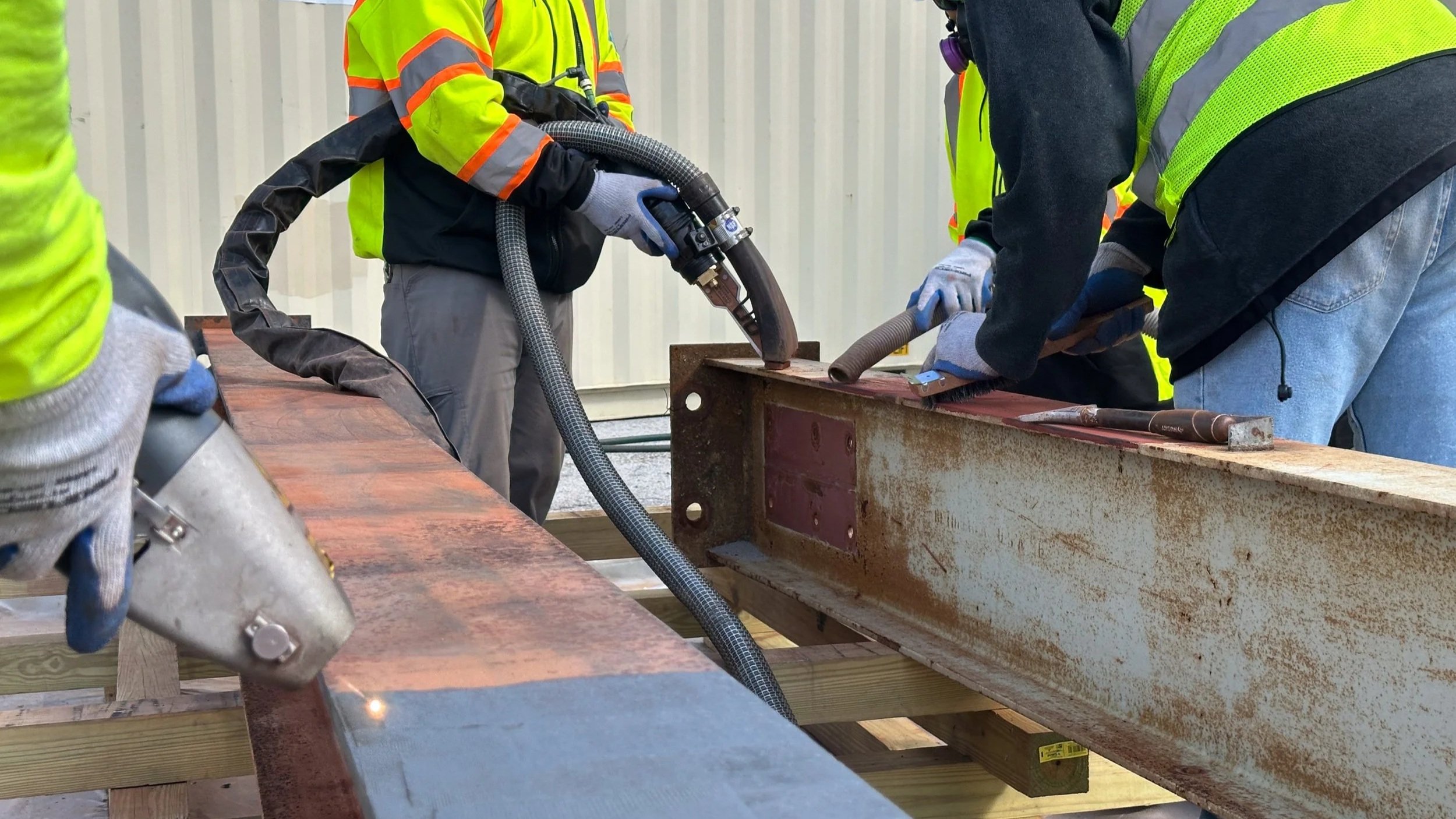
Best-Tec technicians using the company’s patented ICRALA method to strip coatings from steel beams at a naval port, part of a targeted corrosion-control effort as showcased in this project gallery.
This is Best-Tec’s home turf.
We specialize in the difficult, dangerous work that others avoid. With decades of experience in asbestos removal, lead abatement, and environmental decontamination, we clear the path for maintenance. We understand that you cannot reach the rust without first safely navigating the hazards covering it.
Moving Beyond "Bulk" Repairs
For years, the industry standard for dealing with corrosion on hazardous surfaces was the "bulk" approach. To fix a small area, you often had to shut down the entire area, build containment structures, and blast the entire surface. It was like using a sledgehammer to crack a nut.
The complexities of this method result in deferred maintenance until small repairs can be bundled together and until shipyard repairs provide the opportunity for massive preservation work. This perpetuates the “it can wait” model. Meanwhile, assets deteriorate, safety concerns increase, and mission readiness suffers. It encourages commanders and facility managers to defer maintenance.
Best-Tec is championing a shift toward precision intervention.
By aligning our environmental services with modern technologies—such as the ICRALA (Induction Coating Removal and Laser Ablation) process—we are helping the military move away from the "all or nothing" maintenance model.
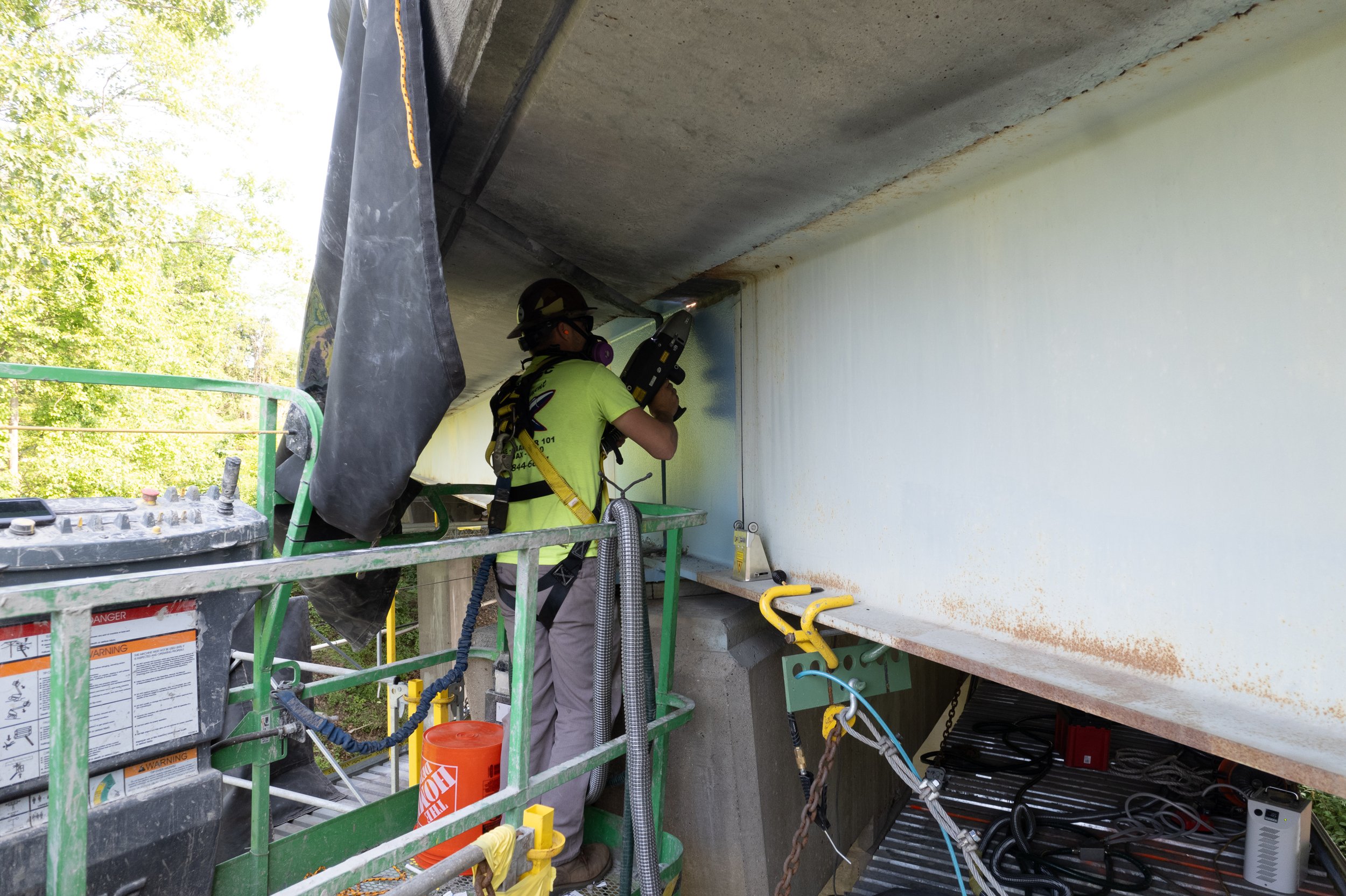
A Best-Tec technician applying laser ablation to a bridge beam end. Unlike traditional methods such as grit blasting, this isolated approach allows for maintenance control without completely shutting down the area. More from this project.
The Power of Surgical Intervention
The future of military infrastructure maintenance is surgical. Instead of stripping an entire ship hull or bridge span, we can now target specific areas of corrosion with pinpoint accuracy.
This shift offers profound benefits for military readiness:
Maintenance Without Shutdown: Traditional abrasive blasting requires vacating the area. Precision removal methods allow for more controlled and timely maintenance while minimizing assets down time. We can treat and repair active corrosion where and when it is needed without disrupting the operations around it.
Reduced Waste: Abrasive blasting creates an enormous volume of contaminated waste to clean up and dispose. Best-Tec’s media-free corrosion control methods virtually eliminate secondary waste.
Speed: When you don't need to build a cathedral of containment, the work gets done faster. We turn days of setup into days of production.
Environmental Decontamination as a Force Multiplier
Readiness is about speed and availability. If a specialized team has to spend weeks setting up containment zones before they can even look at a corroded pipe, that asset is effectively offline.
Best-Tec acts as a force multiplier by streamlining the preservation process. Our qualified personnel are trained to work in strict compliance with environmental, health, and safety regulations. We handle the environmental consulting, the site clearance, and the hazardous material disposal.
Our team enables military decision-makers to focus on deployment rather than downtime for asset maintenance.
Whether it is mold remediation in barracks or lead paint removal on a historic naval pier, our role is to neutralize the environmental threat so that structural integrity can be restored. We take the "too hard" pile and turn it into "mission accomplished."
Proactive Preservation: A New Mindset
A shift from reactive to proactive maintenance is the only viable path forward for the US military.
Waiting for corrosion to become a crisis is a luxury the armed forces cannot afford. A bridge that is closed for emergency repairs is a logistical choke point. A hangar that is off-limits due to asbestos exposure is a gap in air superiority.
We are enabling a model of micro-maintenance. By making it easier and safer to remove hazardous coatings, we allow maintenance teams to fix small problems while they are still small.
Early Intervention: We can address corrosion at the first sign of degradation.
Extended Lifespan: Proactive care adds years to the service life of critical infrastructure.
Cost Savings: Avoiding emergency maintenance repairs saves millions in the long run.
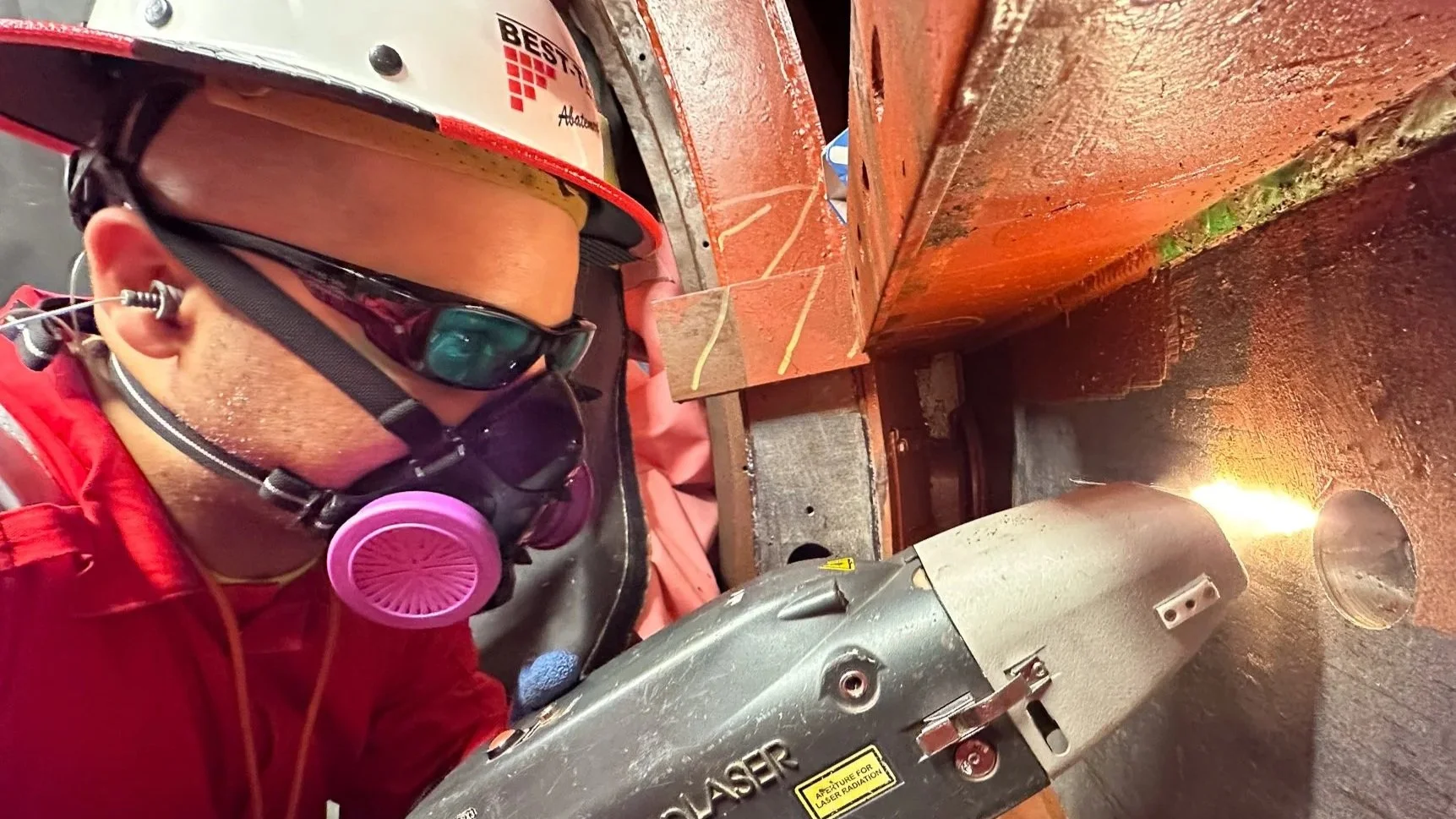
A Best-Tec technician employs precision laser ablation to remove coating.
Ready for the Future
The US military requires partners who are as disciplined and dedicated as the service members they support. Best-Tec’s commitment to safety, reliability, and customer service makes us that partner.
We are not just removing paint or clearing asbestos; we are removing barriers to readiness. We are ensuring that when the call comes, the infrastructure supporting our troops is sound, safe, and ready for action.
It is time to stop watching rust grow. It is time to start preserving what we have built. With Best-Tec, the path from rust to readiness is clear, clean, and efficient.